
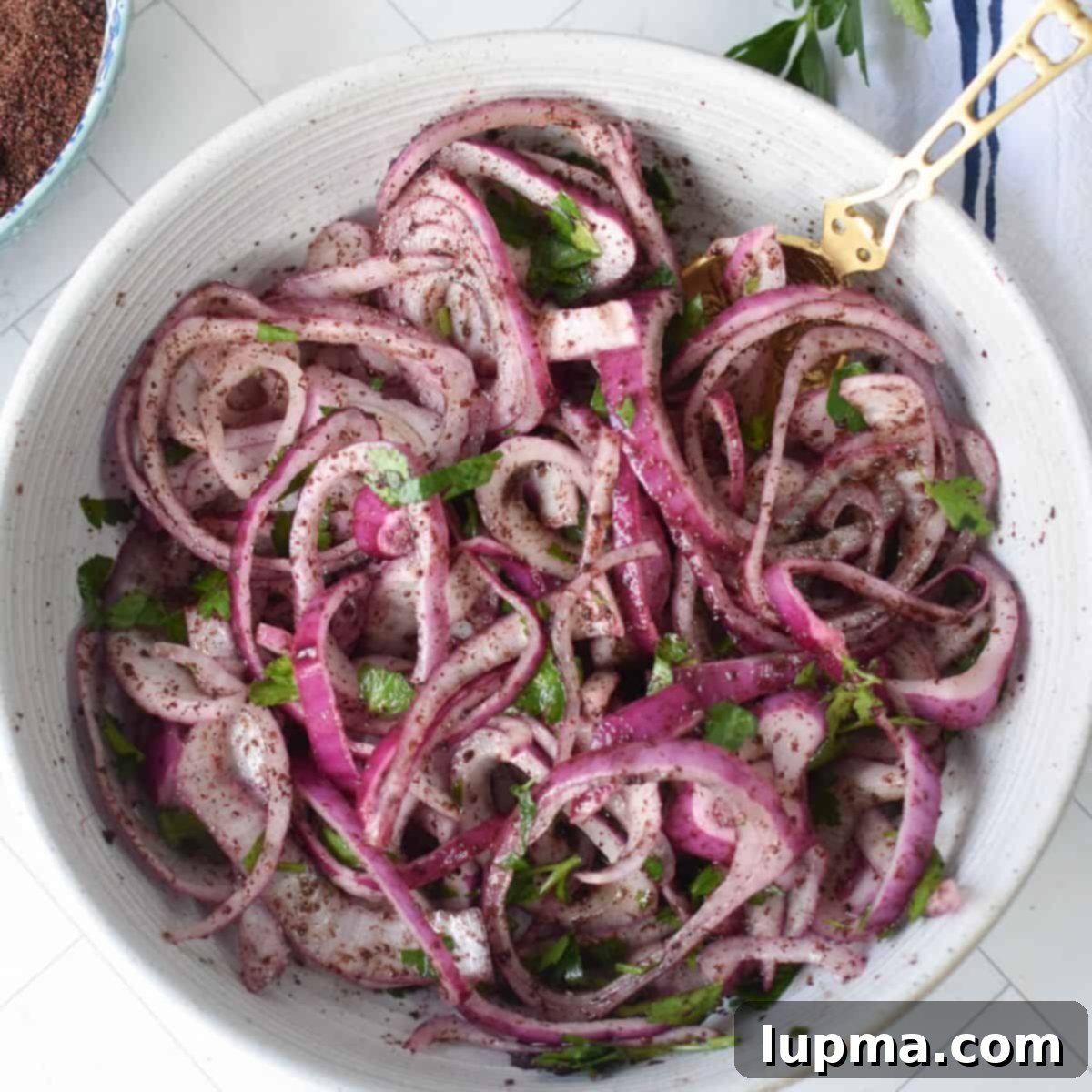
Authentic Lebanese Sumac Onions: Your 5-Minute Zesty Condiment Recipe
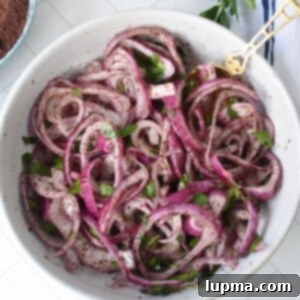
Bright, vibrant, and bursting with zesty flavor, these Lebanese Sumac Onions are the essential condiment you never knew your fridge was missing. Incredibly quick to prepare in just five minutes, this simple yet profoundly flavorful mixture of thinly sliced red onion, tart sumac, fresh lemon juice, and aromatic parsley transforms nearly any dish. From classic shawarma and crispy falafel to hearty grain bowls and delicate grilled fish, these tangy onions add a burst of freshness and complexity that elevates every bite.
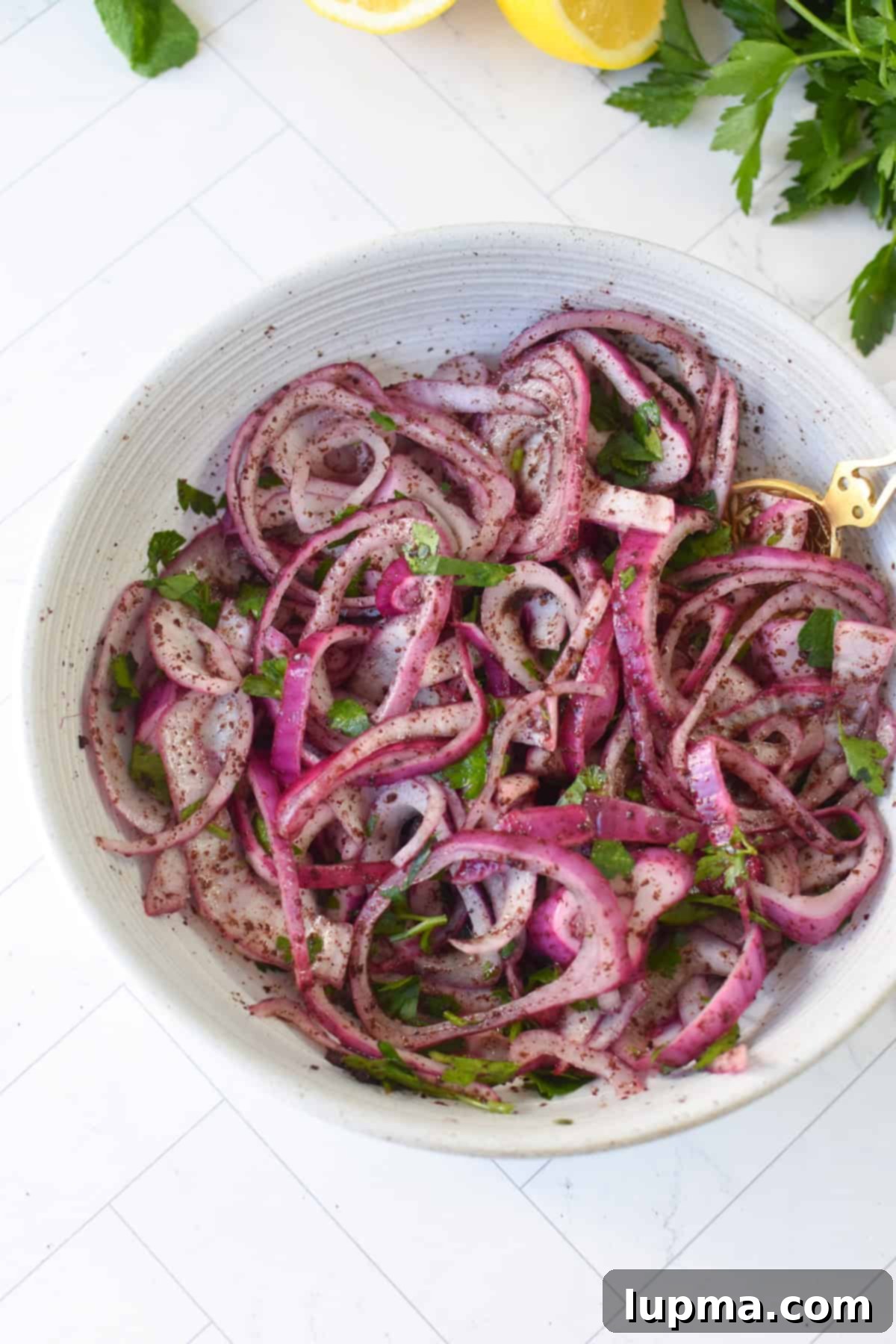
Sumac onions represent one of those indispensable Lebanese condiments, an absolute game-changer that makes everything it touches taste infinitely brighter and more dynamic. In many Middle Eastern households, including my own, a bowl of these crimson-hued onions is a common and beloved sight at the table, offering a refreshing counterpoint to richer flavors. You’ll often find them generously tucked alongside a platter of succulent beef shawarma, elegantly spooned over a crisp fattoush salad, or piled high on a comforting beef and hummus platter – precisely where the warm, spiced meat truly benefits from a tart, acidic cut. They are equally delightful served next to flaky white fish with tahini, providing a tangy, herby complement. This speedy side dish requires only five minutes of preparation, and once you have a jar of these vibrant onions chilling in your refrigerator, you’ll discover yourself reaching for them constantly, transforming everyday meals into extraordinary culinary experiences.
Perhaps you’re curious: what exactly are sumac onions? Essentially, sumac onions are thinly sliced red onions that have been lovingly marinated in a simple yet potent dressing of sumac, fresh lemon juice, a touch of red wine vinegar, high-quality olive oil, and finely chopped fresh parsley. They stand as a foundational condiment across Lebanese, Turkish, and broader Middle Eastern cuisines. While they are most famously served as a vital accompaniment to grilled meats like shawarma, kebabs, and falafel, their versatility knows no bounds. Honestly, they’re one of those magical additions you’ll soon find yourself putting on just about everything! These delightful onions are sometimes referred to as a Turkish Onion Salad or a simple red onion salad, highlighting their widespread appeal. The star ingredient, sumac, imparts a distinctly tart, almost citrusy depth that plain lemon juice alone simply cannot replicate. The best part? They take mere minutes to assemble, last up to four days in the fridge, and remarkably, taste even better on day two as the flavors fully meld and deepen.
Why You’ll Want to Make These Lebanese Sumac Onions Every Week

This recipe is a true marvel of simplicity and flavor. Requiring just five staple ingredients, absolutely no cooking, and a mere five minutes of active preparation time, it proves that incredible taste doesn’t have to be complicated. But don’t let the straightforward process mislead you; the resulting flavor profile is anything but simple, boasting a vibrant complexity that will surprise and delight your palate.
The magic happens through the harmonious combination of key elements. Sumac’s earthy tartness, reminiscent of bright berries, meets the zesty acidity of fresh lemon juice, beautifully complemented by the subtle sharpness of red wine vinegar. Together, these ingredients work in synergy to transform humble sliced onions into something truly extraordinary. They develop a complex, almost pickled-tasting quality, all without the long wait time typically associated with traditional pickling. A good quality extra virgin olive oil is crucial here, as it beautifully rounds out the sharp edges of the acids and, importantly, helps the deep red sumac powder cling evenly to every single slice of onion, ensuring a consistent burst of flavor in each bite.
Beyond their amazing taste, these sumac onions are also an outstanding option for meal prep, making your weeknights significantly easier and more flavorful. Imagine whipping up a batch on Sunday evening and having a ready-made, flavor-boosting condiment to enhance your meals throughout the entire week. Easily drop them onto a wholesome weeknight hummus bowl, neatly tuck them into a satisfying falafel wrap, or generously pile them on top of perfectly cooked Greek grilled chicken. Each time you incorporate these onions, the dish instantly tastes more intentional, more gourmet, and simply more delicious. They’re a testament to how a small, quick addition can make a huge impact on your cooking.

Essential Ingredients for Perfect Sumac Onions
Crafting these delicious sumac onions requires only a handful of fresh ingredients, each playing a vital role in creating their signature bright and tangy flavor. Here’s a closer look at what you’ll need and why each component is so important:
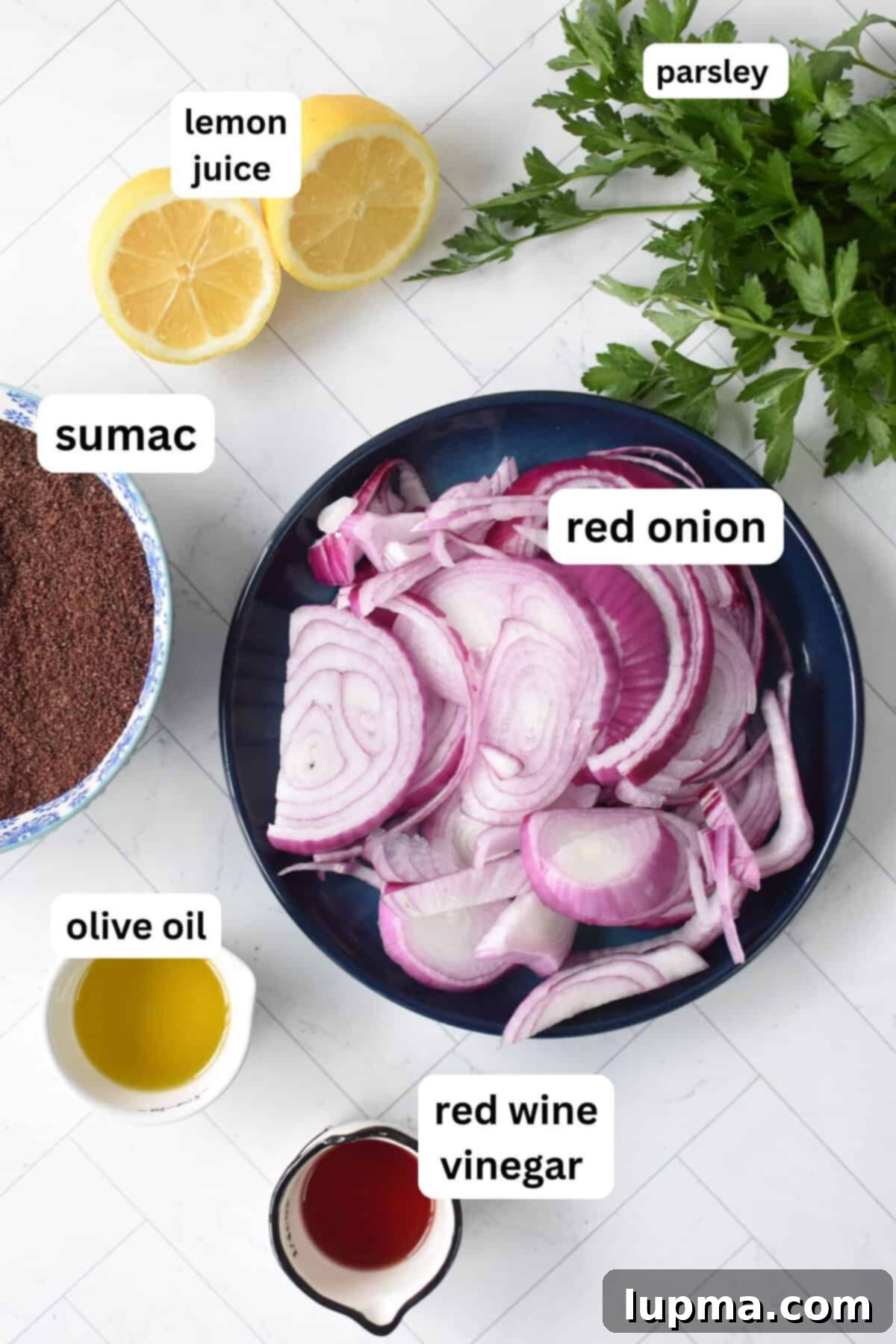
- Red Onion: The foundation of this condiment. Red onions are chosen for their distinctive sharp, yet subtly sweet flavor profile, which mellows beautifully once massaged with the acidic sumac dressing. Their beautiful purple hue also adds to the visual appeal. For the ideal texture, slice them thinly into elegant half-moon shapes. A mandoline slicer makes this task effortless and ensures consistent thickness, which is key for even marination.
- Sumac: The undeniable star of the show. This unique spice is derived from dried, ground sumac berries and boasts a tart, fruity, and slightly earthy flavor. Imagine the brightness of lemon zest but with a more complex, almost tangy berry undertone. Sumac powder is a deep reddish-purple and is an absolute staple in Lebanese and broader Middle Eastern cooking. You can usually find it in the spice aisle of most well-stocked grocery stores, at Middle Eastern markets, or conveniently online. When purchasing, look for a vibrant, deep red color; a faded hue indicates an older, less flavorful product.
- Fresh Lemon Juice: A burst of pure, clean acidity. This is one ingredient where fresh truly makes a difference—bottled lemon juice simply won’t deliver the same vibrant, zesty flavor. Always opt for freshly squeezed. For an even more intense lemony punch, consider adding a pinch of finely grated lemon zest.
- Red Wine Vinegar: This adds a deeper, more nuanced layer of acidity that complements the lemon juice perfectly. The combination of both lemon and red wine vinegar is what gives these onions their characteristic ‘almost-pickled’ quality, providing a sophisticated tang without a long brining process.
- Extra Virgin Olive Oil: Essential for rounding out the sharp acidity and binding all the flavors together. The olive oil helps the sumac adhere beautifully to every onion slice, distributing the vibrant color and taste evenly. Using a good quality, flavorful extra virgin olive oil will significantly enhance the overall richness and mouthfeel of the condiment.
- Fresh Parsley: Beyond adding a beautiful pop of green color, fresh parsley contributes a vital element of freshness and a subtle, herbaceous bite. Flat-leaf (Italian) parsley is generally preferred over curly parsley for its stronger flavor and more delicate texture.
- Salt: A small pinch of salt is crucial. It not only seasons the entire mixture, balancing the tart and acidic notes, but also helps to draw out some of the natural moisture from the onions, contributing to their slight softening and better absorption of the marinade.
Customizing Your Sumac Onions: Easy Recipe Modifications
One of the beauties of this sumac onion recipe is its flexibility. Feel free to adjust it to suit your personal taste preferences or what you have on hand:
- Boost the Sumac: If you adore a bold, intensely tangy flavor profile, don’t hesitate to increase the sumac up to 2 tablespoons. This will deepen the color and amplify its signature tartness.
- Lighter Sumac Flavor: If sumac is new to your palate, start conservatively with 1 tablespoon. Taste the mixture after marinating for a few minutes and then add more if you desire.
- Herb Swap: Not a fan of parsley? Fresh mint makes a fantastic alternative, introducing a different, refreshing herbal note that pairs wonderfully with the tangy onions.
- Skip the Vinegar: For a lighter, purely citrus-forward result, you can omit the red wine vinegar entirely. Simply compensate by adding a little extra fresh lemon juice to maintain the desired tang.
- Add a Touch of Heat: If you enjoy a subtle kick, a pinch of red pepper flakes or authentic Aleppo pepper will add a gentle warmth without overpowering the delicate sumac flavor.
- Oil-Free Option: For a lighter version, you can certainly leave out the extra virgin olive oil. The lemon juice and vinegar are potent enough to carry the marinade on their own, resulting in an equally delicious, albeit slightly sharper, condiment.
- Infuse with Garlic: A small clove of finely minced or grated fresh garlic can add an extra layer of savory depth and a more assertive flavor if you’re a garlic lover.
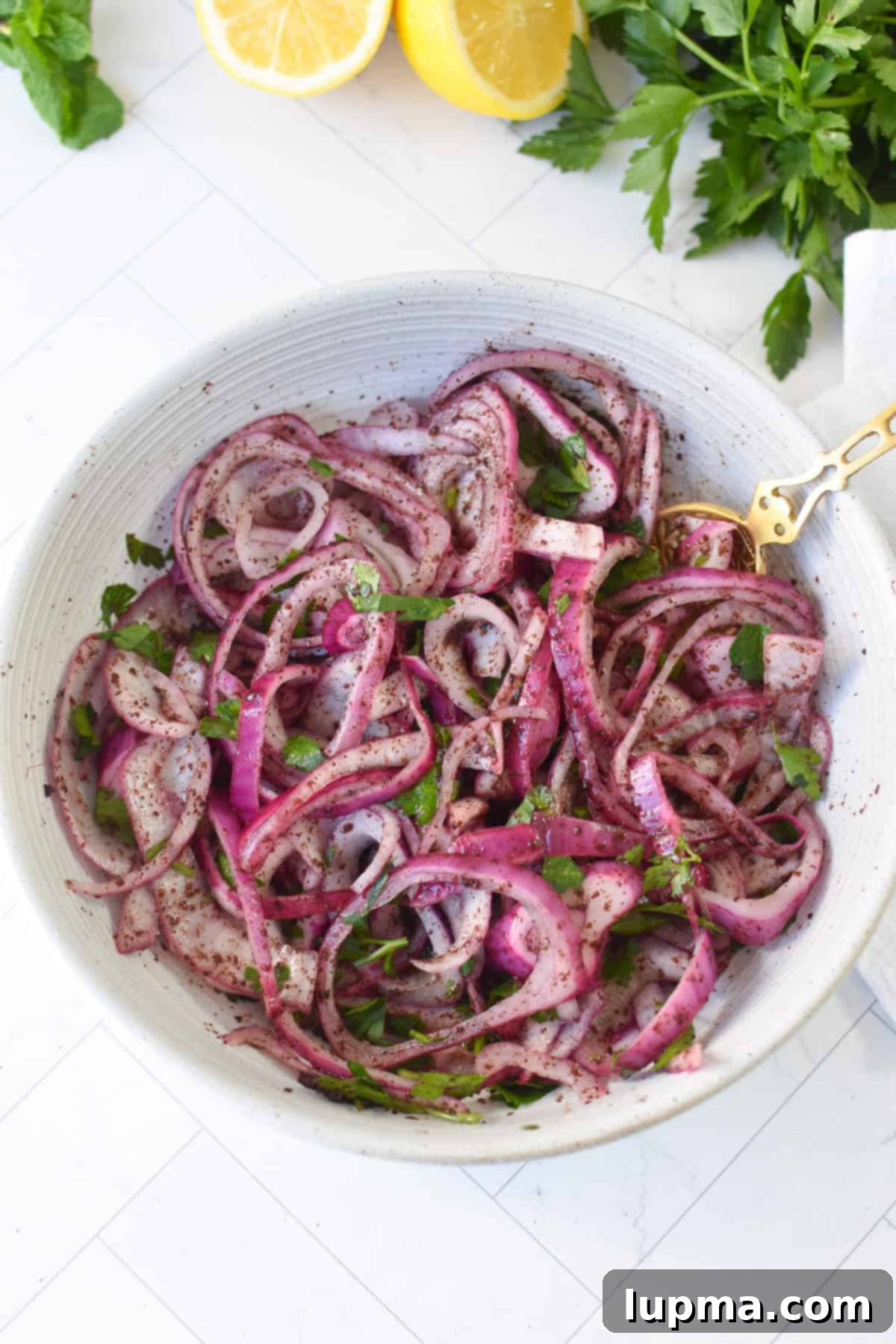
To Soak or Not to Soak: Mellowing Your Red Onions
This is a common question and truly the only real decision point in preparing sumac onions. The choice boils down to your personal preference for the pungent “bite” of raw onion.
- Skip the Soak: If you appreciate a sharp, assertive onion flavor, then skipping the pre-soak is perfectly fine. The marinade itself, particularly if you give the onions a good massage and allow them to sit for at least 30 minutes, will sufficiently soften them and temper their raw edge. Personally, I find the unsoked method delivers a more robust flavor and prefer it.
- Opt for the Soak: If you are particularly sensitive to the pungency of raw onion, planning to serve these to children, or simply prefer a distinctly milder, more mellow and lightly tangy result, then a quick soak is advisable. To do this, simply place your thinly sliced onions in a bowl of cold water for about 10 minutes. After soaking, it is absolutely crucial to drain them thoroughly and pat them completely dry with a clean kitchen towel or paper towels before proceeding. Skipping the pat-dry step will result in excess water diluting your flavorful marinade, making your sumac onions watery and less impactful.
- Rest assured, either approach will yield delicious results. This choice is purely a matter of flavor preference, not a right or wrong method.
Crafting Your Own Lebanese Sumac Onions: Step-by-Step Guide
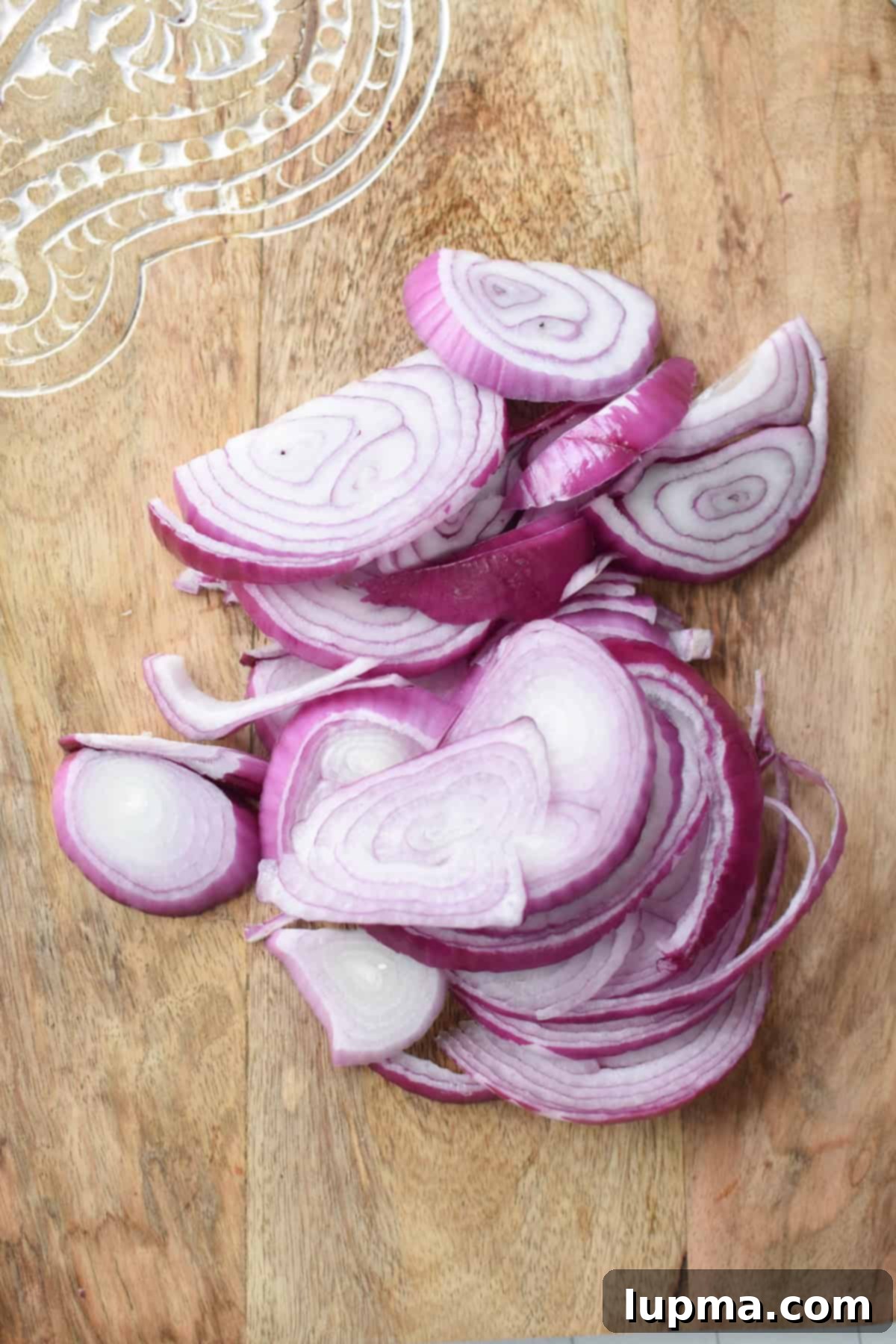
Step 1: Slice the Onions. Begin by cutting your red onion in half, from the stem end down to the root. Peel away the outer layers, then carefully slice each half into thin half-moon shapes. Your goal is to achieve slices that are supple enough to bend slightly but not excessively thin or translucent, ideally around ⅛ inch thick. A very sharp chef’s knife or a mandoline slicer will both work exceptionally well for this task. Achieving consistent thickness is vital, as it ensures that every onion slice marinates evenly and acquires the perfect texture. (Optional Soak) As discussed, if you prefer a milder onion flavor, place the sliced onions into a bowl of cold water for 10 minutes. Afterwards, drain them completely and pat them thoroughly dry. Do not skip the pat-dry step, as any residual water will dilute your exquisite dressing.
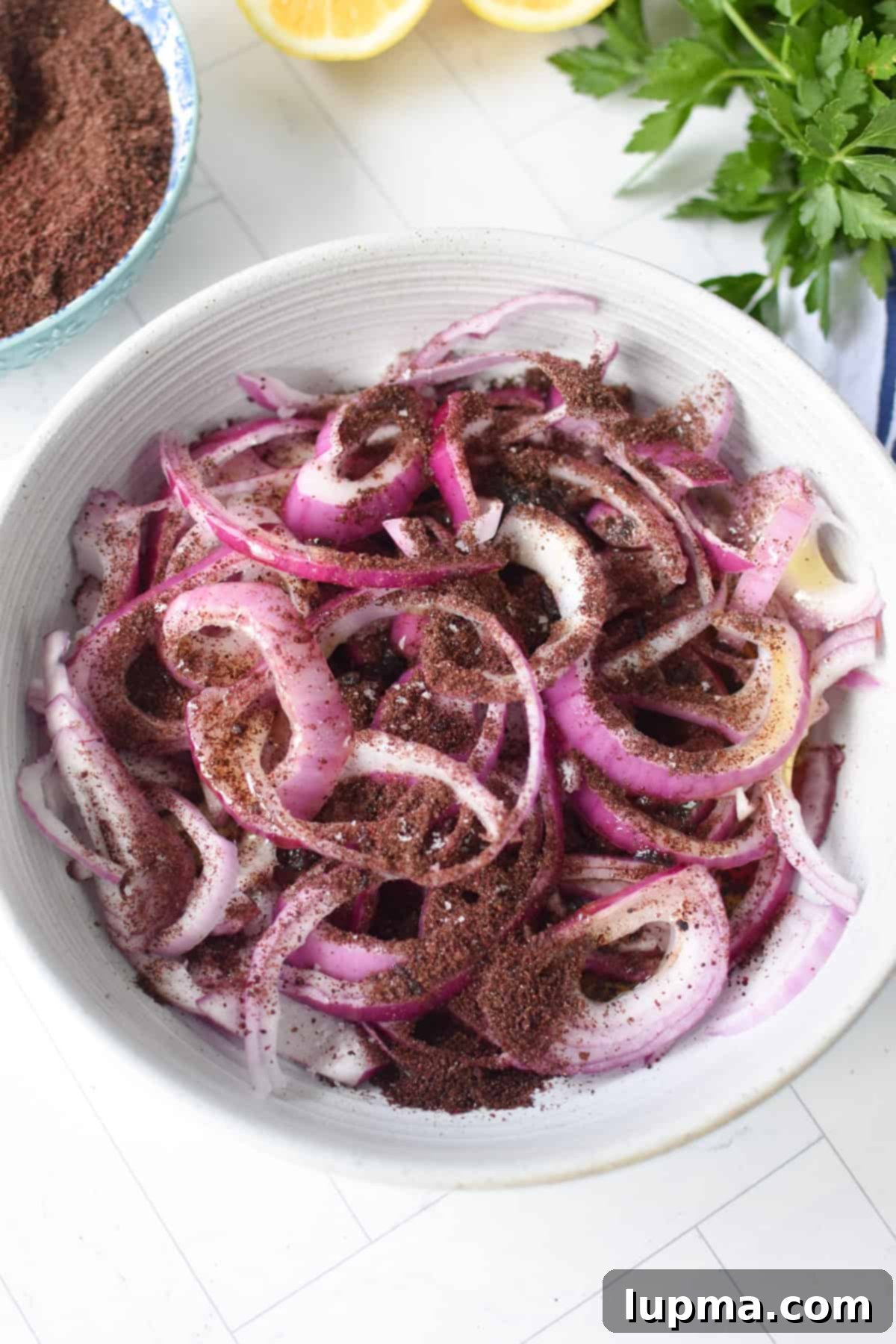
Step 3: Combine All Ingredients. Transfer your prepared red onions to a medium-sized mixing bowl. Now, add the remaining ingredients: the vibrant sumac, freshly squeezed lemon juice, red wine vinegar, high-quality olive oil, chopped fresh parsley, and a pinch of salt. At this stage, resist the urge to stir immediately. The next step is a crucial one that will ensure maximum flavor infusion and texture.
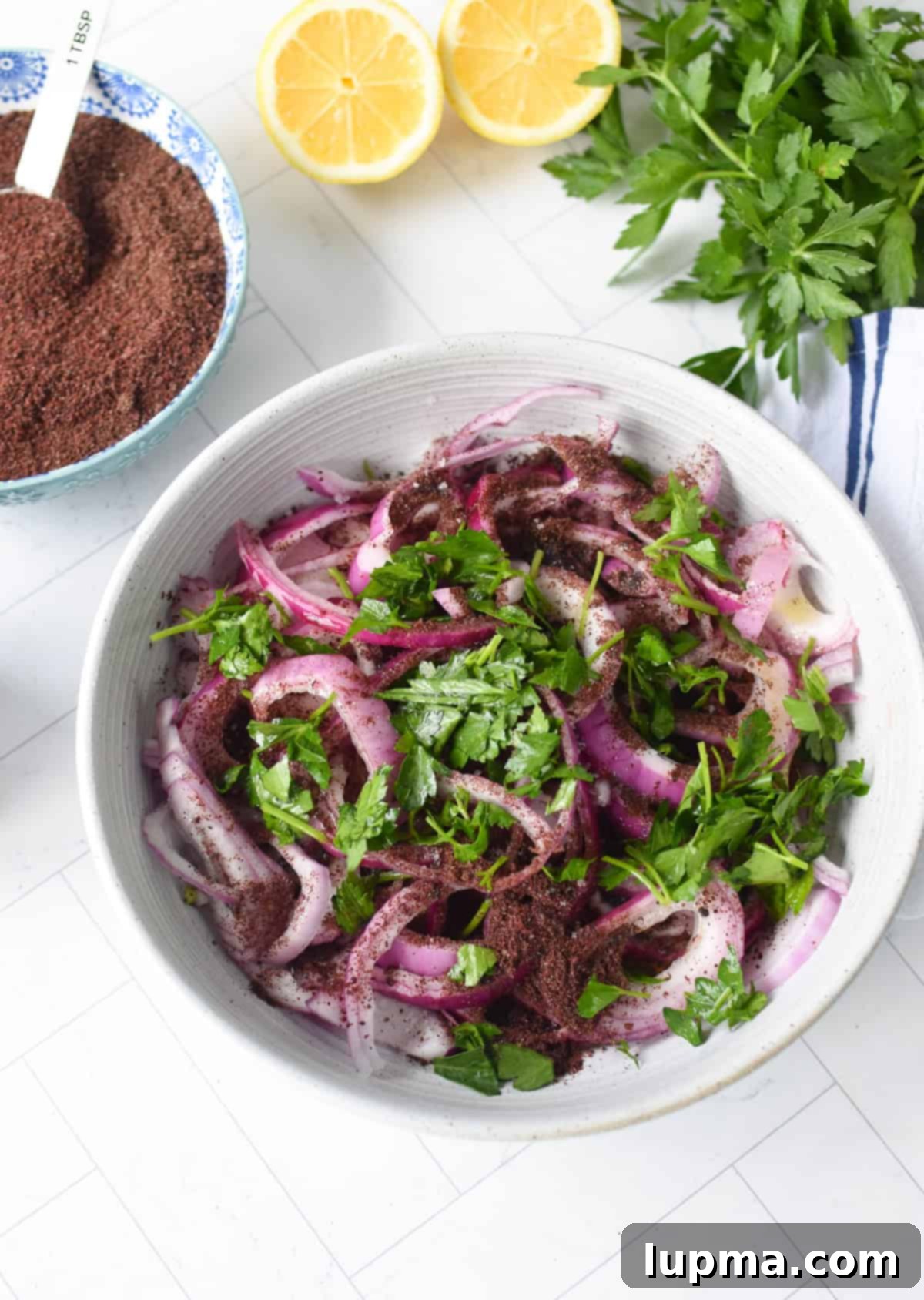
Step 4: Massage and Gently Toss. This step is where the magic truly happens! Using clean hands, gently but firmly massage the onions with the dressing for approximately 60 to 90 seconds. You will notice the onions starting to soften and release a small amount of liquid, which helps create the delicious marinade. Crucially, as you massage, the onions will visibly transform, absorbing the sumac and shifting to a beautiful, deeper reddish-purple color. This manual massaging action significantly accelerates the marination process and results in a far superior texture compared to merely tossing the ingredients. It helps break down the onion’s cell walls, allowing them to better absorb the tangy dressing.
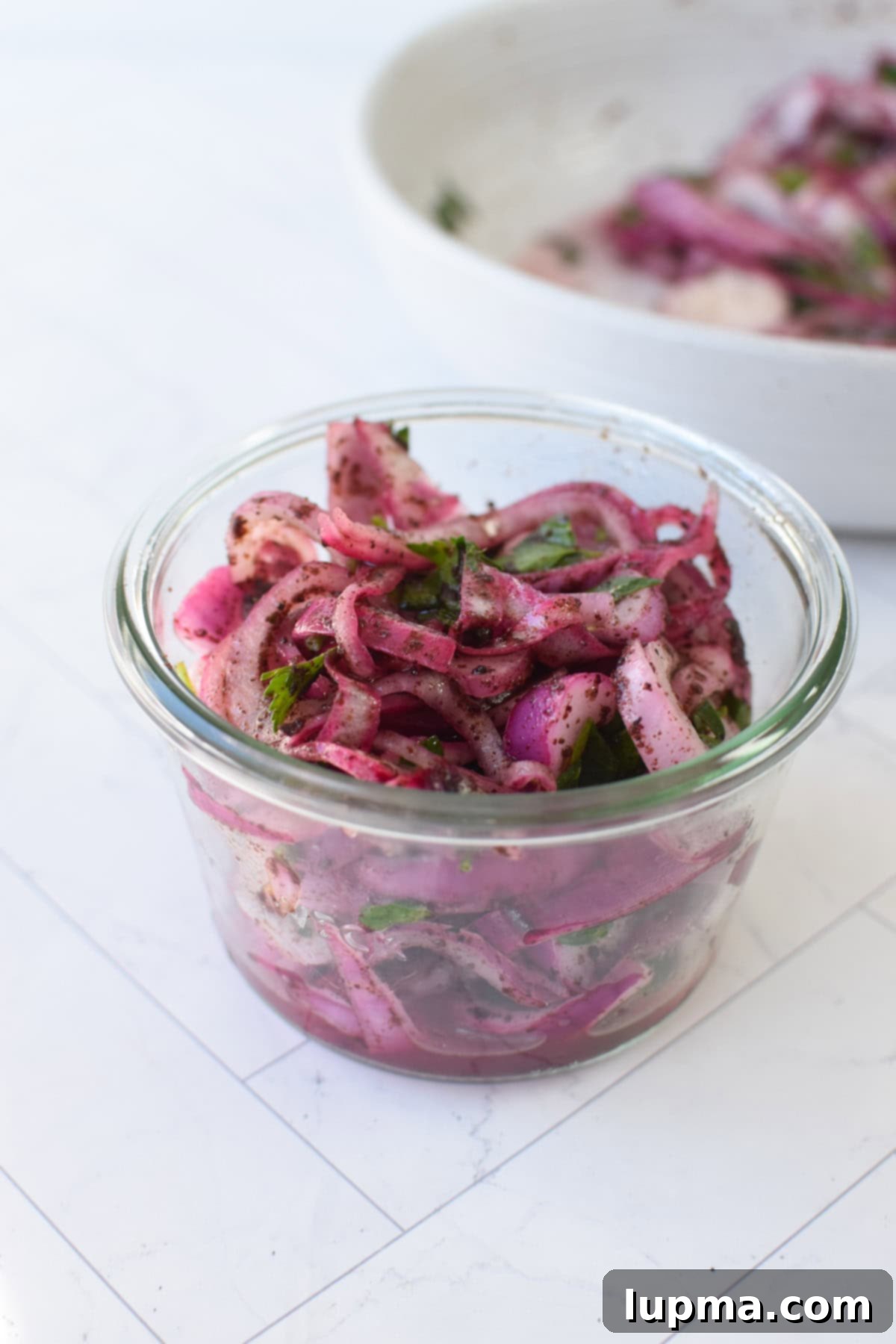
Step 5: Marinate and Serve. After massaging, take a small taste of the onions and adjust the seasoning as needed. Perhaps you’d like a little more sumac for an extra tangy kick, a splash more lemon juice for brighter acidity, or a pinch more salt to enhance all the flavors. Let the sumac onions sit for at least 5 minutes before serving to allow the initial flavors to meld. For an even more profound and harmonious flavor, cover the bowl and refrigerate them for 30 minutes to 1 hour. During this time, the sharp edges of the onions will mellow further, the flavors will deepen beautifully, and the entire condiment will become even more delicious. These are truly one of those culinary gems that develop an even better taste and texture the next day.
Endless Culinary Possibilities: How to Use Sumac Onions
This is precisely why sumac onions deserve a permanent, rotating spot in your refrigerator. Their incredible versatility means they enhance far more dishes than you might initially imagine. Get ready to elevate your meals with this bright and tangy condiment:
- Classic Lebanese Pairings: This is their natural habitat! Pile them generously on warm, fluffy pita bread with homemade chicken shawarma or beef shawarma, tuck them into crispy falafel wraps, serve them alongside juicy grilled kofta, or complement savory lamb kebabs. Their sharp, acidic profile expertly cuts through the richness of meats, adding a much-needed burst of freshness.
- Mediterranean Bowls: Transform your everyday grain or protein bowls into a vibrant feast. Add a spoonful to a nourishing hummus bowl or a healthy quinoa bowl with roasted vegetables. The acidity and striking color instantly make the entire bowl feel more composed, flavorful, and visually appealing.
- Grilled & Roasted Proteins: Lay these tangy onions over perfectly cooked grilled Mediterranean salmon, flaky white fish, or succulent roasted chicken. The tartness serves as an ideal natural counterpoint to rich and fatty proteins, brightening and balancing the overall flavor.
- Enhancing Vegetables: You might be surprised at how wonderfully sumac onions complement various vegetable dishes. They’re particularly fantastic on tender roasted cauliflower, beautifully charred air fryer eggplant, or simply tossed into a fresh, crisp Lebanese Salad. They add zest and a pleasant texture.
- More Creative Ideas: Don’t limit yourself! Tuck these versatile onions into any pita sandwich with leftover chicken or falafel, spoon them over creamy Lebanese Hummus served with crunchy pita chips, or stir them into a hearty lentil bowl for an extra dimension of flavor. They genuinely work anywhere you crave a boost of brightness, tang, and a satisfying textural contrast.

Storage and Make-Ahead Tips for Sumac Onions
These sumac onions are not just delicious; they’re also incredibly convenient for meal planning. Here’s how to store them and why they’re perfect for making in advance:
- Storage: Once prepared, transfer your sumac onions to an airtight container or a mason jar. Store them in the refrigerator for up to 3–4 days. Before each serving, give them a quick stir to redistribute the flavors. The beauty of these onions is that their flavor genuinely deepens and the onions themselves mellow beautifully over time, often tasting even better on day two or three.
- Make Ahead: This is one of the absolute best recipes to prepare in a larger batch at the beginning of your week. Whip up a full batch on Sunday, and you’ll have a versatile, flavor-packed condiment ready to enhance everything from quick grain bowls and sandwiches to elaborate salads and grilled proteins throughout the entire week. This significantly streamlines meal prep and adds gourmet flair to simple dishes.
- Do Not Freeze: Unfortunately, sumac onions do not freeze well. Upon thawing, the onions lose their crisp texture completely, becoming mushy and unappealing. It’s best to enjoy them fresh from the refrigerator within their recommended storage time.
Frequently Asked Questions About Sumac Onions
While you technically can substitute, red onion is very strongly preferred for this recipe. Red onions possess the perfect balance of sharpness and a natural vibrant color that beautifully transforms into a deep reddish-purple when combined with sumac. White onions tend to be more pungent and lack the aesthetic appeal, while yellow onions are typically too mild and sweet for this specific, bright, and tangy preparation, often resulting in a less impactful flavor profile.
The recipe recommends 1.5 tablespoons, which delivers a bold, distinctly tangy, and beautifully coated result. If you are a devoted fan of sumac and enjoy an even more pronounced tartness, feel free to increase the amount to 2 tablespoons. However, if sumac is a new spice for you, it’s wise to start with 1 tablespoon, taste after the initial marination, and then add more gradually until you reach your preferred level of flavor.
Yes, absolutely! While fresh parsley adds a lovely pop of color, an element of freshness, and a subtle herbal note, the sumac onions remain incredibly delicious and flavorful even without it. If you’re not a parsley fan, or simply don’t have any on hand, you can omit it. Alternatively, substituting fresh mint can introduce a different, wonderfully refreshing herbal aroma and taste.
Massaging the onions for 60–90 seconds is a crucial step that offers multiple benefits. It gently softens the onion slices, helping to break down their cell walls which allows them to absorb the sumac and dressing much more effectively and quickly. This action also plays a key role in developing that beautiful, deep reddish color characteristic of authentic sumac onions. If you merely toss the ingredients and set them aside, the onions will still taste good, but their texture will remain sharper, and the vibrant color will be significantly less vivid.
Not quite, though they share some similarities in their tangy profile. Traditional pickled onions are typically fully brined in a strong vinegar solution over a period of several hours or even overnight, resulting in a much softer texture and a more intensely acidic flavor. Sumac onions, on the other hand, are a quick marinated preparation. They offer a similar bright tang but are lighter, generally less acidic, and are wonderfully ready to serve in under an hour. If you’re specifically looking for a quick pickled red onion recipe, you might enjoy these Quick Pickled Red Onions!
More Delightful Vegetable & Condiment Recipes
Vegetarian
Quick Pickled Vegetables
Sides
Quick Pickled Beets (No Canning, Ready in 24 Hours!)
Vegetarian
Refrigerator Dill Pickles
Mediterranean
Easy Marinated Tomatoes
Tried this recipe? Leave a star rating and comment below! Subscribe to my newsletter or follow me on
Facebook,
Instagram, or
Pinterest for the latest.
Sumac Onions
Julia Jolliff
Saved
Pin
5 minutes
5 minutes
4
Ingredients
-
1
large red onion,
thinly sliced into half-moons -
1/4
cups
fresh parsley,
chopped -
1.5
tablespoons
sumac,
(more or less depending on how much sumac flavor you like) -
1
tablespoons
fresh lemon juice -
1
tablespoons
red wine vinegar -
1
tablespoons
extra virgin olive oil -
1/4
teaspoons
salt
Instructions
-
Cut the red onion in half from stem to root, then peel and slice each half into thin half-moon shapes. For the best results, use a sharp knife or a mandolin to get even, thin slices.
-
Optional soak: If you prefer a milder onion flavor, place the sliced onions in a bowl of cold water and soak for 10 minutes. Drain well and pat dry before continuing if you soaked the onions.
-
In a medium bowl add the sliced red onions. Add the sumac, lemon juice, red wine vinegar, olive oil, parsley, and salt to the bowl.
-
Using clean hands, gently massage the onions for about 1 minute until they slightly soften and are fully coated in the sumac dressing. This helps the flavors absorb faster and gives the onions a beautiful deep red color.
-
Let the onions marinate for at least 5 minutes before serving (or for even better flavor, cover and refrigerate for 30 minutes to 1 hour). The longer they sit, the more the flavors meld and the onions mellow. Serve as a topping, condiment, or side alongside your favorite Mediterranean dishes.
Notes
- Storage: Store in an airtight container or mason jar in the refrigerator for up to 3–4 days. Give them a quick stir before serving. The flavor deepens and the onions mellow beautifully over time, they’re actually even better on day 2!
- Make it ahead: This recipe is perfect for meal prep. Make a batch at the start of the week and use it on everything, grain bowls, wraps, salads, grilled chicken, and more.
- Adjust to taste: Love bold sumac flavor? Go up to 2 tablespoons. Prefer it milder? Start with 1 tablespoon and add more after tasting.
- Serving ideas: Kebabs, shawarma, falafel wraps, pita sandwiches, hummus bowls, grilled salmon, roasted cauliflower, grain bowls, or tacos.
- Do not freeze, the onions lose their crisp texture once thawed.
Nutrition
Serving:
1
g
,
Calories:
45
kcal
,
Carbohydrates:
3
g
,
Protein:
0.4
g
,
Fat:
4
g
,
Saturated Fat:
1
g
,
Polyunsaturated Fat:
0.4
g
,
Monounsaturated Fat:
3
g
,
Sodium:
149
mg
,
Potassium:
66
mg
,
Fiber:
1
g
,
Sugar:
1
g
,
Vitamin A:
317
IU
,
Vitamin C:
8
mg
,
Calcium:
12
mg
,
Iron:
0.3
mg
Nutrition information is automatically calculated, so should only be used as an approximation.
Tried this recipe?
Mention @acedarspoon or tag #acedarspoon!